You notice a pale patch under the heel while putting laundry away. The sock has no obvious hole, but it feels thinner than its partner. Elsewhere in the drawer is a newer pair that already slips down inside your shoes. It is hard to judge either one by the date you bought it.
How long socks last depends on how often you wear them, the friction inside your shoes, their construction and their care. A calendar can help you remember to check your rotation, but the condition of each pair tells you more. This guide explains the signs of useful life remaining, when repair makes sense, and when replacing a pair is the more comfortable choice.
Key Takeaways
- There is no single lifespan that applies to every sock and wearing routine.
- Thinning, holes, persistent bunching and lost cuff recovery are more useful signals than age alone.
- Pilling is a surface change and does not automatically mean a sock is worn out.
- Check footwear when holes repeatedly appear in the same place.
- Repair a localized problem when the surrounding fabric and fit are still sound; replace socks that no longer function comfortably.
Why a Fixed Number of Months Is Misleading
A pair worn once a week has a different workload from one worn for long walks every other day. The number of wearing hours, the surfaces rubbing against the knit and the frequency of laundering all change the demands on it. A drawer rotation also affects how often any individual pair is used.
Even similar-looking socks can use different yarns, knit densities and reinforcement. In a study of sock abrasion resistance, researchers used a modified Martindale test to compare fibers, yarn parameters and finishing processes. Coarser yarns and certain supporting synthetic fibers improved abrasion resistance in the tested samples. Laboratory rub counts cannot be converted into a universal number of months of wear.
Rather than adopting a blanket replacement deadline, inspect the pairs you wear most when they come back from the wash. That is a convenient moment to compare both socks in good light.
Five Signs to Check
1. The heel or forefoot is noticeably thinner
Hold the sock up to the light and compare the worn area with the surrounding fabric. A naturally open mesh panel is different from a patch that has gradually become thin. If the heel now feels rough, fragile or nearly transparent compared with when it was new, it may be approaching the end of its useful life.
Compare the left and right socks too. One side wearing much faster can point to a particular shoe contact point or a difference in how the pair is being used.
2. A hole or seam opening changes the feel
A small hole can expand as the knit stretches. If the rest of the sock remains sound, a neat repair may be worthwhile. The repair should lie smoothly and feel comfortable inside the shoe; a thick knot under a pressure area can introduce a new irritation.
When several areas are thin or the fabric around the hole breaks easily, repairing one opening is unlikely to restore the whole sock.
3. The cuff no longer recovers
A cuff should return toward its original shape after ordinary stretching. If it remains loose and the sock repeatedly drops into the shoe, assess whether the fit has changed. First rule out an incorrect size or a different shoe combination; slipping is not always caused by age.
Rolling a tired cuff into a tight band is a temporary workaround that may feel uncomfortable. It does not restore the original stretch of the fabric.
4. Fabric keeps gathering beneath the foot
Persistent bunching after you have positioned the heel correctly can indicate that the sock no longer holds its shape, or that it never fitted that shoe-and-foot combination well. Either way, the useful question is whether you can wear it comfortably without repeated adjustment.
5. A cushioned area has changed enough to bother you
Padding can flatten with wear. A change in appearance alone does not require replacement, but a pair that now feels uneven or no longer gives the comfort you chose it for deserves reassessment. Compare it with another sound pair of the same style if you have one.

Pilling Is Different from Structural Wear
Small balls of fiber on the surface can make a sock look older without showing whether the underlying knit is sound. Look beneath the pills for thinning, holes or broken yarns. A sock that retains its fit and comfortable fabric can still be useful even if it no longer looks new.
If you remove pills, use a method suitable for the fabric and avoid pulling at loose fibers. Aggressive shaving or cutting close to a thin area can damage the knit. Do not treat cosmetic tidying as a repair for an already weakened heel.
Why Do My Socks Get Holes in the Same Place?
Repeated wear at one toe, the back of the heel or a particular side of the foot is a reason to inspect the shoes as well as the socks. Feel for a rough lining, a damaged insole edge or a seam that contacts that area. Check whether the shoe is crowding the toes and whether the sock size leaves the fabric unusually taut.
Also consider when the wear happens. Walking around on rough floors in socks adds a different kind of friction from wearing them inside shoes. If the environment is wearing through the same area repeatedly, buying identical replacements without changing anything may reproduce the problem.
Make Everyday Care Easier on the Pair
- Follow the specific label. Different fibers and finishes can need different washing and drying conditions.
- Keep abrasive items separate. Open fasteners and rough hardware can catch on knitwear during laundering.
- Give socks time to dry fully. Keep enough pairs for your laundry routine so you are not reaching for a damp pair.
- Handle cuffs gently. Avoid unnecessary overstretching when dressing or storing socks.
- Match socks to their use. A fine everyday sock need not be your default for every rough surface or demanding activity.
For detailed merino care, use our guide to washing wool socks. That routine should support the product's label rather than replace it with a single rule for every sock.
Keep, Repair or Replace?
| Condition | A reasonable next step |
|---|---|
| Surface pilling; fabric and fit remain sound | Keep wearing and tidy gently if desired |
| Small isolated hole; surrounding knit remains strong | Consider a smooth repair, then check comfort |
| Repeated slipping or bunching | Check size and footwear; replace if the sock has lost its shape |
| Several thin areas or holes that keep expanding | Replace for regular wear |
| One sock is sound and its partner has failed | Keep the sound sock if you can make a comfortable, compatible pair |
There is no need to discard a comfortable pair solely because it has reached a particular birthday. Equally, there is no benefit in keeping a worn-out pair in your regular rotation just because it is relatively new.
Choose Replacements Around the Problem You Found
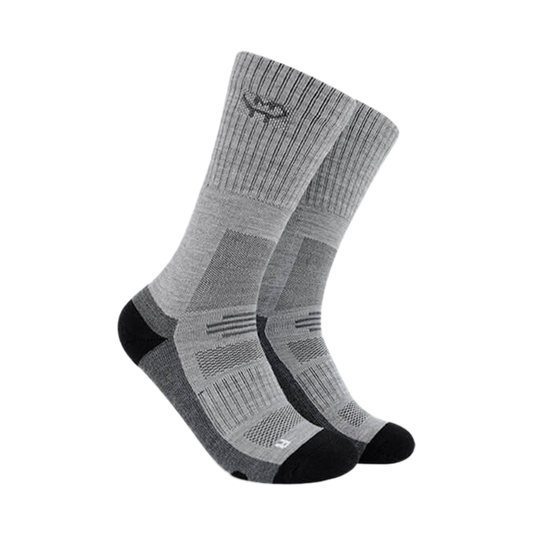
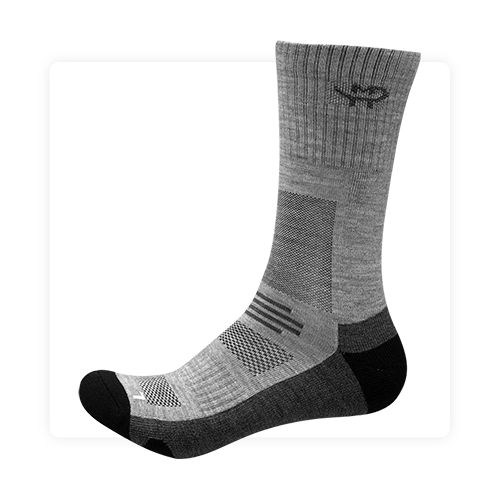
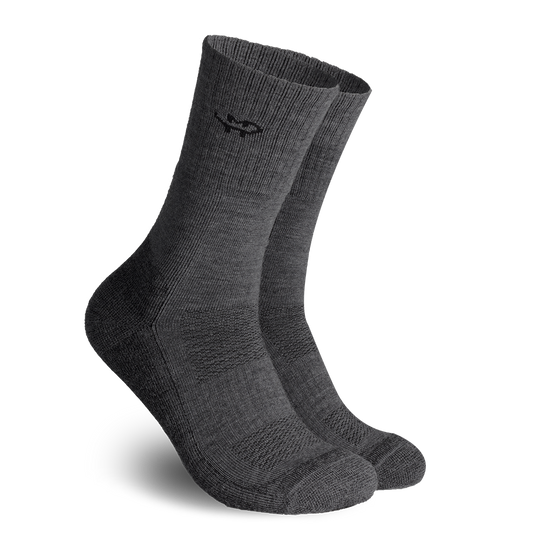
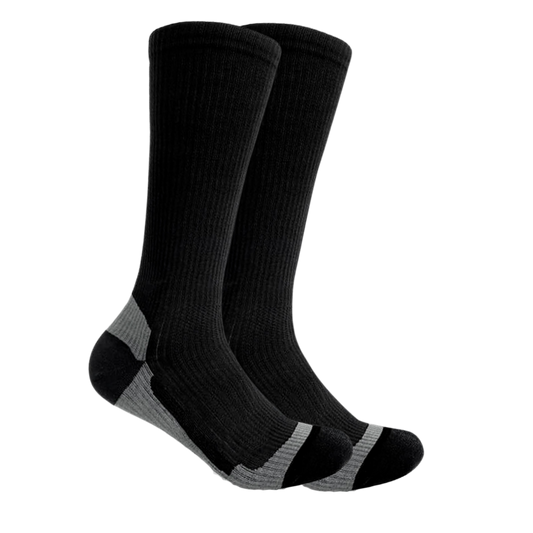
Our Classic 2.0 Merino Wool Crew Socks combine a merino-rich blend with targeted cushioning, mesh ventilation and an updated heel construction. They are an option when you want a cushioned everyday crew that fits the room available in your shoes.
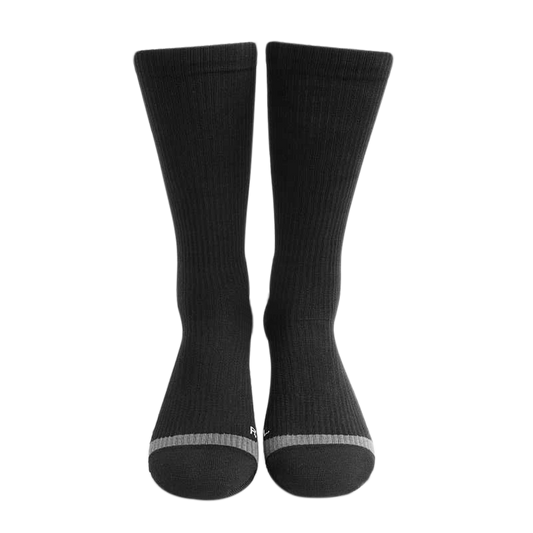
For a cotton-rich daily pair, our Supima Cotton Crew Socks use cotton with nylon and Lycra for a soft feel and stretch. Choose the style and size that address your own fit needs, then build a rotation around how often you wash.

Frequently Asked Questions
How often should you replace socks?
When their condition or fit no longer supports comfortable use. Check for thinning, holes and loss of shape rather than following a fixed schedule for every pair.
Do expensive socks always last longer?
No. Price does not isolate the effects of construction, use, footwear and care. Choose features relevant to your routine and judge the actual wear over time.
Should I throw away socks with holes?
A small hole in otherwise sound fabric may be repairable. Multiple weak areas, uncomfortable repairs or lost fit make replacement more practical.
Does washing cause every hole?
No. Wear can also come from footwear contact, rough surfaces and strain on the fabric. Look for a pattern before blaming a single part of the routine.
Let the Condition Guide the Decision
A quick heel, toe and cuff check can tell you which pairs are ready for another week and which need attention. Keep what still works, repair what is worth repairing, and replace the pairs that no longer feel comfortable in your everyday shoes.