The cotton socks you like for a quiet office day may feel quite different after a crowded commute or an afternoon on your feet. An athletic pair can feel lighter when damp but less familiar against your skin. Neither experience is explained by the fabric name alone.
Comparing polyester vs cotton socks means looking at how the fibers handle moisture, how the sock is knitted, and what your shoes let that moisture do next. This guide explains the practical differences, where blends fit in, and how to choose a pair for everyday wear or more active days.
Key Takeaways
- Cotton absorbs moisture readily; polyester absorbs less into the fiber itself.
- Absorbency, wicking and drying are different properties. A polyester label alone does not prove fast drying.
- Cotton-rich socks can be comfortable for everyday wear, while appropriately constructed synthetics can suit sustained activity.
- Knit structure, cushioning, fit and footwear can change the result substantially.
- Neither material prevents sweating, and no fiber label guarantees odor-free feet.
What Changes When the Fiber Changes?
Cotton absorbs moisture
Cotton is a cellulosic fiber that takes up moisture. That absorbency can feel pleasant during ordinary daily use, especially when you prefer a soft cotton surface against your skin. As a sock becomes wetter, however, the moisture still has to leave the fabric and escape from the shoe.
A thick cotton sock inside a poorly ventilated shoe may remain damp longer than you would like. That does not mean every cotton sock is heavy or unsuitable for movement. A lighter knit, a different blend and more breathable footwear can create a very different wearing experience.
Polyester absorbs less into its fibers
Polyester has low moisture absorption within the fiber. In a sock designed to move liquid through its yarns and knit, this can help support moisture transport and drying. But liquid can still sit between fibers, and a dense sock inside a closed shoe can still feel wet.
For that reason, “polyester” and “moisture wicking” are not interchangeable terms. Fiber shape, yarn construction, finishes, thickness and available airflow all matter. Look for the complete sock design rather than assuming any synthetic pair will behave like specialist sportswear.
Cotton vs Polyester Socks at a Glance
| What you are comparing | Cotton-rich socks | Polyester-rich socks |
|---|---|---|
| Moisture absorption | More uptake into the cotton fibers | Less uptake into the polyester fibers |
| Feel | Often chosen for a familiar soft cotton touch | Varies from smooth and fine to heavily cushioned |
| Drying | Can stay damp when wet, especially in dense knits | Can dry readily when construction and airflow allow |
| Daily use | A useful starting point for casual and office wear | Useful where a performance construction suits the activity |
| What to check | Thickness, stretch, seams and how dampness feels | Knit design, fit, odor after wear and care instructions |

Why the Knit Can Matter as Much as the Label
Turn a sock inside out and look at the bottom. A looped terry surface, a flat knit and a mesh panel have different structures even when the fiber percentages look similar. Those structures change bulk, contact and the way the fabric behaves inside footwear.
A controlled study comparing cotton and polyester sock fabrics found that knit structure was the strongest factor in dry friction testing, while fiber composition had little apparent effect under those conditions. The tests used a plastic probe and synthetic skin, not people walking in wet socks. They show why a fiber-only ranking leaves out important details.
Fit adds another layer. Excess fabric under your toes or a heel pocket that slides away from your heel can be annoying regardless of composition. Put the socks on with your actual shoes, fasten the shoes normally and walk before buying several identical pairs.
What About Odor?
Moisture management and odor control are related concerns, but they are not the same claim. A sock may dry readily and still hold an unpleasant smell after wear. Your feet, footwear, activity and laundry routine all contribute.
In research on clothing worn during exercise, polyester T-shirts collected after a spinning session smelled more intense and less pleasant than cotton shirts after 28 hours of incubation. The study involved 26 people and T-shirts, not socks worn inside shoes. It is a reason to avoid assuming polyester automatically controls odor, rather than proof that all cotton socks will smell better.
Give shoes time to dry, wash socks according to their labels, and change out of a damp pair. If odor is your main buying concern, our antibacterial socks guide separates material choices from odor-control construction.
Choose for the Day You Have Planned
Office work, errands and relaxed daily wear
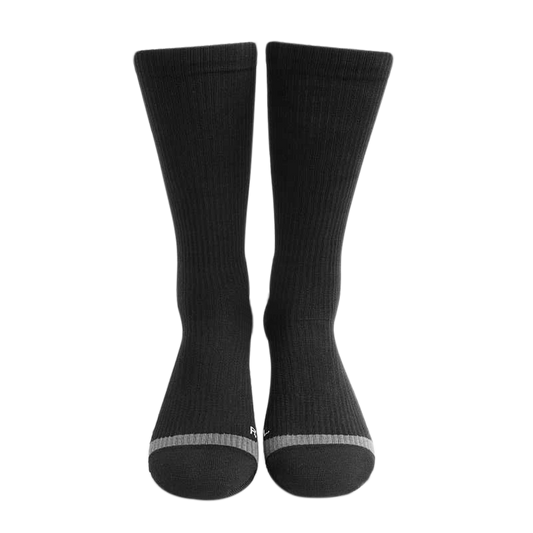
Start with the feel you enjoy and a thickness that fits your shoes. A cotton-rich crew can be an easy choice for a day with moderate activity and opportunities to change shoes. Check that the cuff stays comfortable when you sit and that the toe seam does not become noticeable in a snug shoe.
Longer walks and repeated exercise
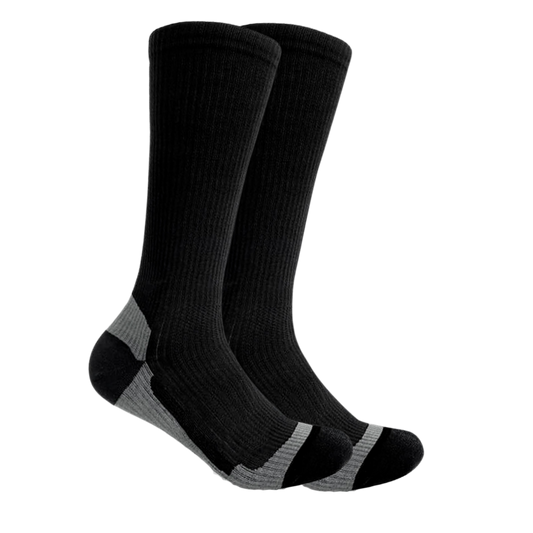
When you expect sustained sweating, look more closely at moisture transport, construction and how the sock feels after use. A suitable polyester blend may be worth trying, but compare it in your regular footwear. Introduce a new pair on a shorter outing before relying on it for an entire day.
For persistently damp feet, our guide to socks for sweaty feet covers the broader shoe-and-sock routine. Socks can help manage moisture; they do not switch off sweat production.
When you are comparing blends
A cotton sock may include nylon for durability and elastane for stretch. Those are different fibers from polyester. Read the complete composition rather than sorting every blend into a vague “synthetic” category. Merino blends offer another option, explored in our cotton vs wool socks comparison.
MP Magic Cotton Options for Everyday Comfort
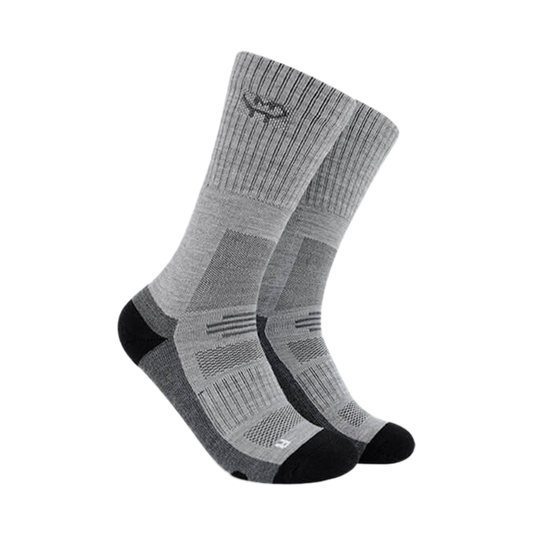
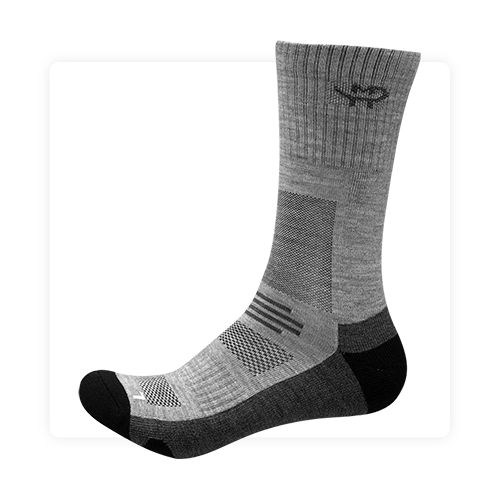
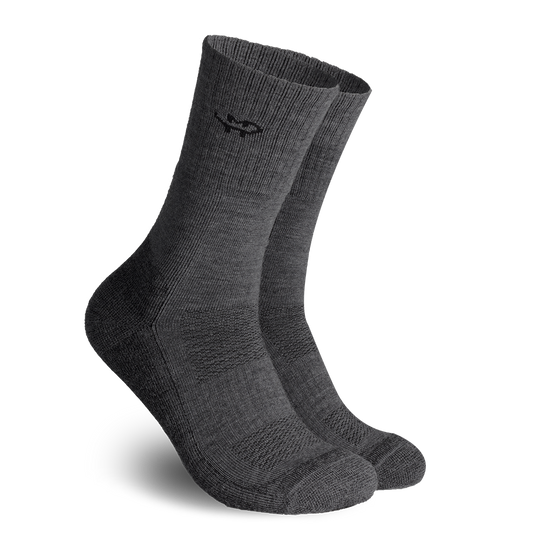
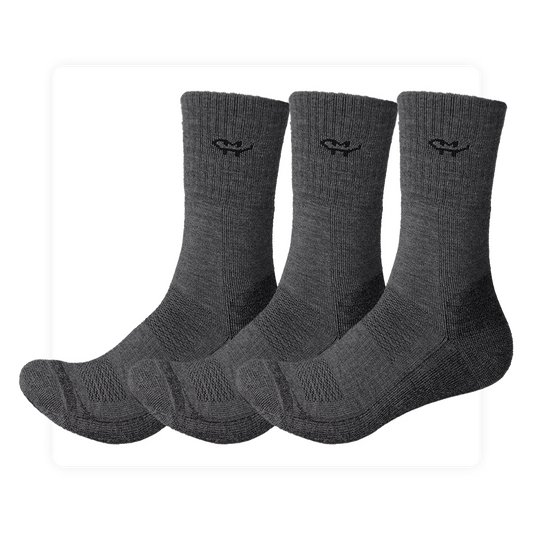
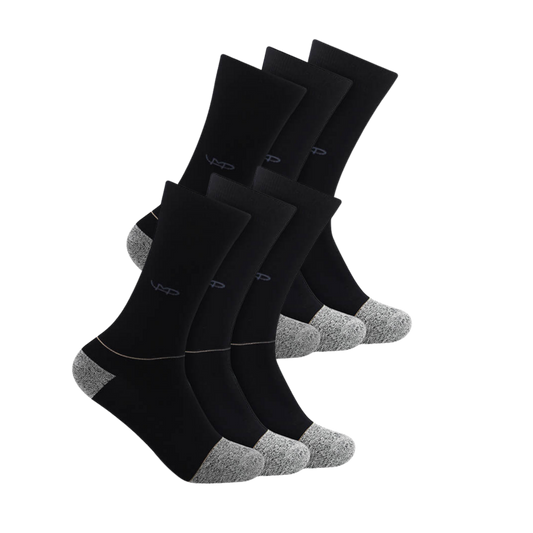
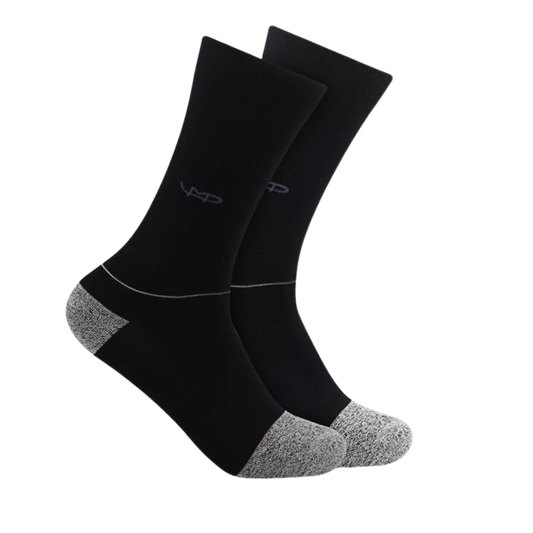
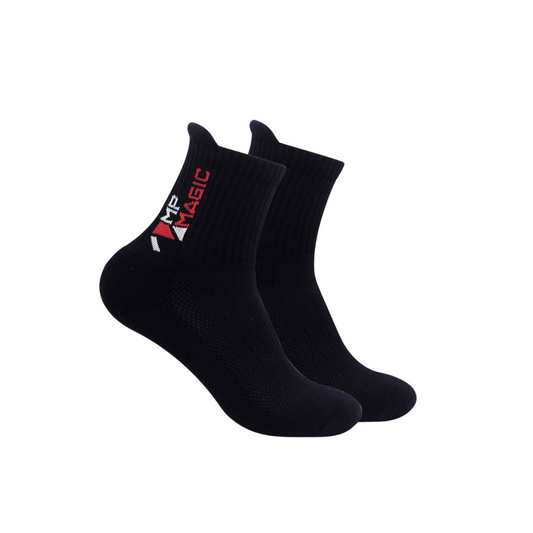
Our Supima Cotton Crew Socks combine 82% Supima cotton, 13.5% nylon and 4.5% Lycra. The cotton-rich feel and stretch make them a natural starting point for a daily crew-sock rotation, with MP Special Yarn included in the design.
For a straightforward cotton crew, explore our Cotton Crew Socks. Choose between the styles by fit, feel and the shoes you wear most, rather than expecting the word cotton to answer every comfort question.

Frequently Asked Questions
Are polyester socks good?
They can be, particularly when the knit and fit suit an active routine. Judge the whole design and your experience wearing it, not the fiber name on its own.
Are cotton socks bad for sweaty feet?
Not automatically, but a cotton-rich pair that stays damp may be a poor match for your activity and shoes. Try a different construction and manage moisture in the footwear too.
Are polyester socks warmer than cotton socks?
There is no reliable ranking without comparing thickness, structure, moisture and footwear. A thin synthetic sock and a thick cotton sock are not equivalent constructions.
Is a higher natural-fiber percentage always better?
No. Supporting fibers can add stretch or durability. The useful question is whether the complete blend and knit meet your needs.
Start with Feel, Then Test the Whole Pairing
Choose a material that suits your routine, then assess the sock inside your shoes after some movement. A comfortable fit and a manageable amount of moisture will tell you more than a cotton-versus-polyester label alone.