White socks rarely become dull in exactly the same way. One pair has a dark sole after a day without shoes, another looks grey after washing with darker laundry, and a third has a yellow patch that remains after an ordinary cycle. Reaching for a stronger treatment each time can turn a cleaning problem into damaged fabric.
A more useful routine starts with the kind of discoloration and the sock's care label. This guide explains how to keep socks white, how to approach a stained pair, and when preserving the knit matters more than chasing a brighter shade.
Key Takeaways
- Check the complete blend and care label before choosing a treatment.
- Separate surface dirt, general greying and yellowing instead of treating them identically.
- Use an appropriate pretreatment and the detergent's measured dose.
- White cotton-blend socks are not automatically bleach-safe; MP Supima care instructions say do not bleach.
Identify What Changed
| What you see | Consider | First practical step |
|---|---|---|
| Dark marks on the sole | Tracked-in soil and direct floor contact | Remove loose dirt and use a label-compatible pretreatment |
| Overall greying | Mixed colors, crowding or a wash routine that needs adjustment | Separate whites and check load size and detergent directions |
| Localized yellowing | Residue, a specific stain or age-related change | Inspect the area and choose treatment for the known stain |
| Pink or blue tint | Possible color transfer | Avoid drying heat while deciding on a fabric-compatible response |
These are starting points, not a way to identify every stain by color. If you know what caused the mark, use that information. Old discoloration, changed finishes and worn fibers may not respond like fresh dirt.
Read the Label Before Reaching for Bleach
A sock can contain cotton along with nylon, elastane, dyes, trims or special yarns. Its care instructions apply to the finished product. A white appearance does not give permission to use chlorine bleach, oxygen bleach or a hotter wash.
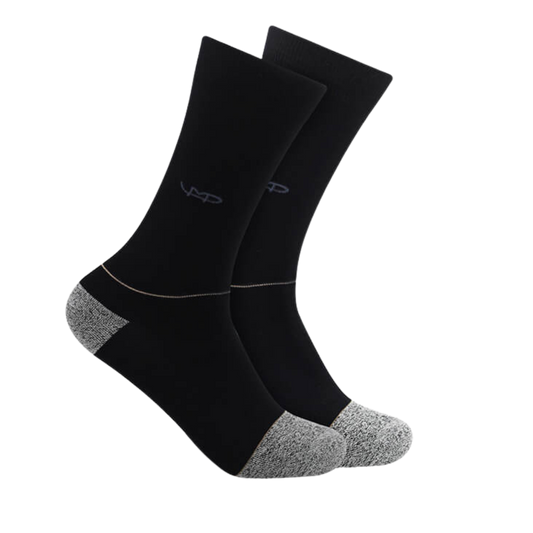
For example, our Supima Cotton Crew Socks specify no bleach and a maximum wash temperature of 40°C. That is a product instruction, not a universal recommendation for every cotton sock. If your own label is more restrictive, follow it.

A Gentle Cleaning Sequence
1. Separate and inspect
Keep whites apart from items likely to transfer color. Empty the socks, shake off loose grit and check for thin areas before treating them. Separate a delicate or wool pair from socks that tolerate a different wash process.
2. Pretreat only with a compatible product
Choose a laundry pretreatment permitted by both its instructions and the sock's label. Test an inconspicuous area if the product directs it. Work gently at a marked sole rather than scrubbing aggressively until the knit distorts. Keep within the stated contact time; longer is not automatically better.
3. Measure detergent and leave room to wash
Follow the detergent's guidance for the load, soil level and water conditions. Adding extra detergent by eye is not a reliable whitening method. Avoid packing the machine tightly; the socks need space for washing and rinsing.
4. Choose a permitted cycle and temperature
Use the product's care instructions. Do not make boiling, a hot soak or a harsh cycle the default response to a white sock. If the blend includes wool, follow the wool label and our wool sock care guide.
5. Inspect before drying
Look at the stained areas after washing. If treatment is incomplete, reassess before using drying heat. Dry as directed, away from a direct heater. Avoid repeatedly washing or treating the same pair without checking whether the fabric is becoming thin or misshapen.
Avoid Homemade Chemical Combinations
Keep cleaning products separate and use them only as directed. The CDC cautions against mixing household bleach with other cleaners or disinfectants. In particular, do not combine bleach with vinegar, ammonia or improvised mixtures.
This safety rule does not make bleach appropriate for a sock whose label prohibits it. If the label says do not bleach, choose a permitted detergent-based routine. A recipe found online cannot override the care restrictions of the garment in your hands.
Keep White Socks Brighter Between Washes
- Use suitable house footwear if walking in socks is leaving heavy soil on the soles.
- Keep dirty pairs separate from clean storage and avoid leaving damp laundry in a closed pile.
- Check new or strongly dyed items before including them in a white load.
- Maintain the washer according to its instructions if clean laundry repeatedly emerges dull.
- Rotate enough pairs to wash and dry them properly without rushed heat treatment.
For choosing white crews to match sneakers or casual outfits, our white sock style guide covers that separate decision. Keep the washing routine tied to the exact pair you choose.
When to Stop Chasing Whiteness
A sound pair with a cosmetic mark can remain useful. If a sock is also thin, stretched or uncomfortable, repeated chemical treatment will not restore its structure. Assess the heel, toes and cuff with our keep-or-replace checklist.
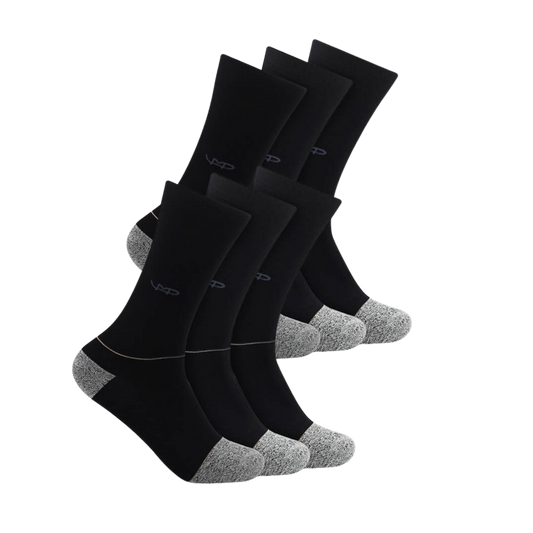
Our Supima Cotton crews offer a soft everyday option when you are refreshing your rotation. Preserve their comfort by using the specified care, including the no-bleach instruction.

Frequently Asked Questions
Can I bleach all white cotton socks?
No. Read the label for the finished sock, including its other fibers and trims. MP Supima socks specify do not bleach.
Will a hotter wash always make socks whiter?
No. It may exceed the care instructions without solving the cause of discoloration. Choose a permitted treatment for the actual problem.
Should I soak socks overnight?
Only when both the sock label and the selected laundry product allow that treatment and duration. Do not make a long soak a universal rule.
Do stained socks always need replacing?
No. Judge fabric condition, hygiene and comfort separately from cosmetic whiteness. A harmless mark in sound fabric is different from a worn-through sole.