The first hour behind a counter can feel very different from the last. By the time you have restocked shelves, helped customers and waited through a quiet stretch, a small fold in a sock can become hard to ignore. A pair that feels soft at home may also take up too much room in the work shoes you need for a full shift.
Choosing socks for standing all day starts with that complete combination. This guide looks at cushioning, fabric, seams and cuff fit, with a simple way to compare pairs in your own work shoes and plan a comfortable change during the day.
Key Takeaways
- Test socks inside the actual shoes you wear for work.
- Choose cushioning that fits without making the shoe tight.
- Keep the sole smooth and the cuff comfortably above the shoe collar.
- Fresh socks, appropriate shoes and chances to change position all have a role in a long shift.
Start with the Work Shoe
A teacher in lace-up shoes, a retail worker in safety footwear and someone using a standing desk have different constraints. Check the room around your toes and across the top of the foot before adding a thicker pair. Your shoes should fasten normally; you should not need to loosen them dramatically to accommodate your socks.
Wear any required insoles during the fitting check. An insole already occupies space, so a heavily padded sock can change a previously comfortable fit. Socks cannot correct a shoe that is the wrong size, lacks the protection your job requires or has a worn interior.
How Much Cushioning Makes Sense?
Choose targeted comfort where you notice contact
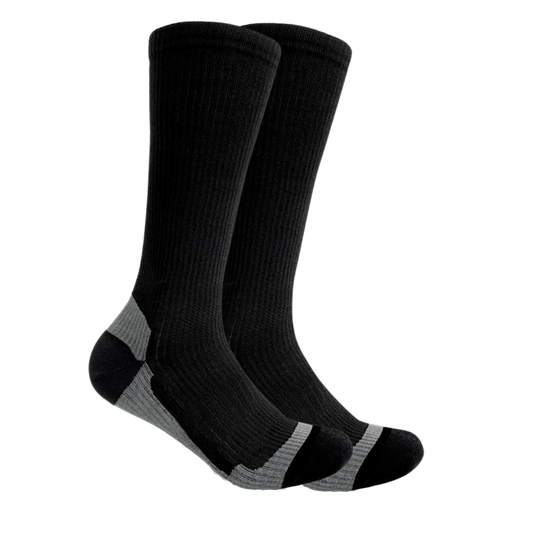
A little extra knit beneath the heel or forefoot can feel pleasant, particularly in a shoe with room for it. Compare the padded areas with the places you actually feel pressure. More padding everywhere is not automatically a better choice for a fitted work shoe.
Try two suitable thicknesses on different days, keeping the footwear and work routine similar. Notice whether the sock remains smooth, whether the toes feel crowded and whether you keep adjusting it. Your practical comparison is more useful than choosing solely by how plush a pair feels in your hand.
Allow for the shape of the shoe
A close-fitting loafer may work better with a lighter crew than a bulky cushioned sock. A roomier lace-up shoe may accommodate more padding. For boot-specific collar and shaft decisions, see our boot sock guide.

Look Beyond the Fiber Name
Softness, knit density, mesh areas and the proportion of supporting yarn all influence how a sock feels. A merino blend can suit someone who prefers a wool feel through indoor and outdoor transitions. A cotton-rich sock may suit someone who already enjoys that feel in an indoor workplace. Either still needs to fit the shoe.
Notice dampness during the shift instead of expecting a fiber name to keep your feet dry indefinitely. Enclosed shoes, warm rooms and personal sweating all affect comfort. Pack a clean spare if you know your socks become damp, and let footwear dry between uses when your routine allows it.
A Shift-Length Fit Check
- Seat the heel pocket and smooth the fabric before putting on shoes.
- Check the toe seam in a standing position and during a short walk.
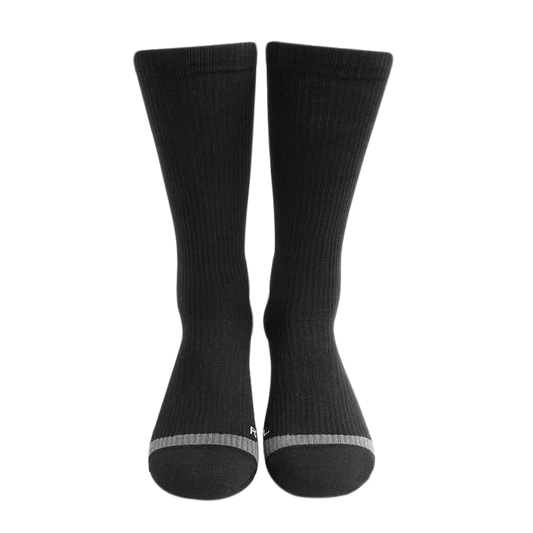
- Confirm that the cuff clears the shoe collar without being pulled taut.
- Recheck the pair at a normal break for bunching, dampness or a cuff that needs repeated adjustment.
- After laundering as directed, check that the sock still recovers its shape.
Make one change at a time when comparing pairs. Changing the shoe, insole and sock together makes it difficult to know what helped. A short note about the combination can save you from buying several versions of the same uncomfortable setup.
Comfort During a Long Shift Includes Movement
When work permits, alternate positions and use available sitting or movement breaks. In their review of prolonged standing at work, Waters and Dick considered interventions including footwear, inserts, mats and sit–stand options. The practical lesson is to consider the workstation and routine alongside what you wear.
This does not make an everyday cushioned sock a medical treatment. If you are choosing compression for a particular health need, get advice appropriate to that need. Persistent pain, numbness or swelling should not be managed simply by trying tighter socks.
MP Magic Options for Work Shoes
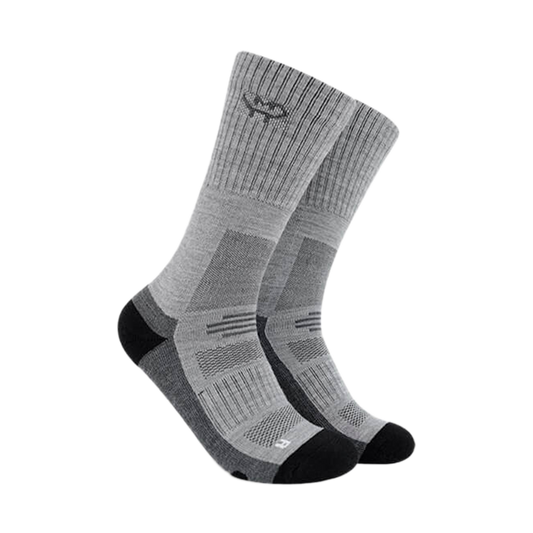
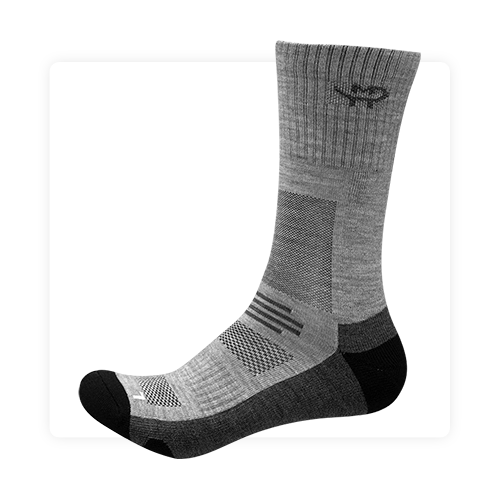
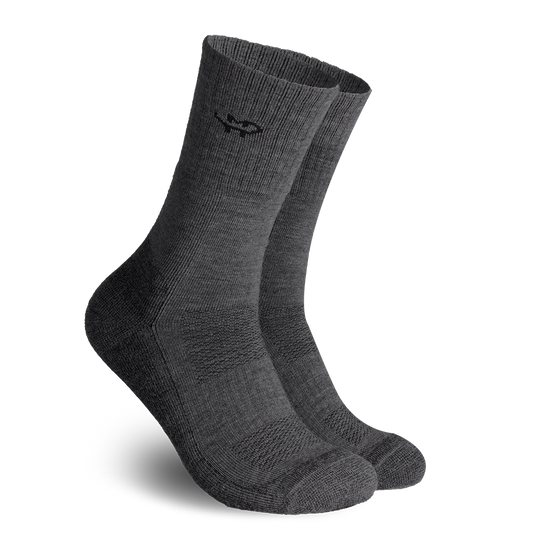
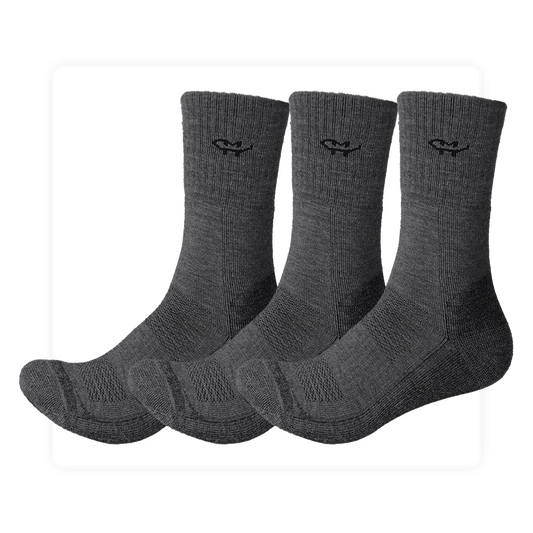
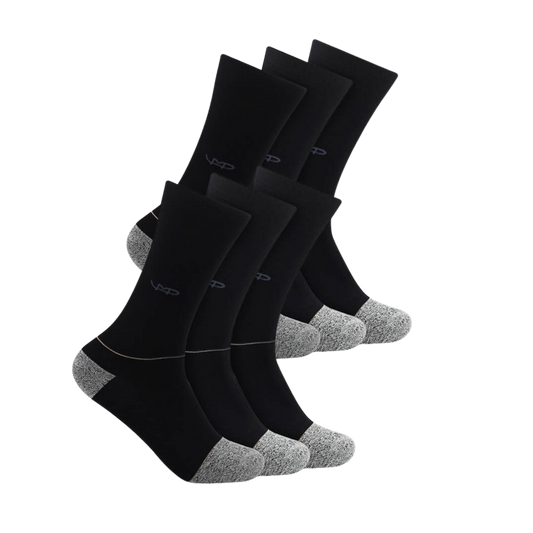
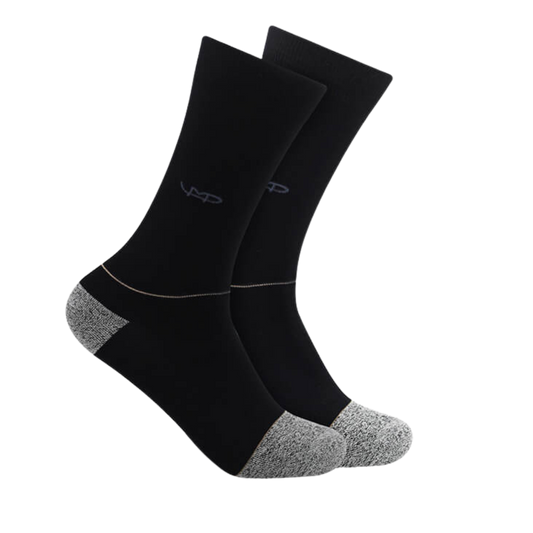
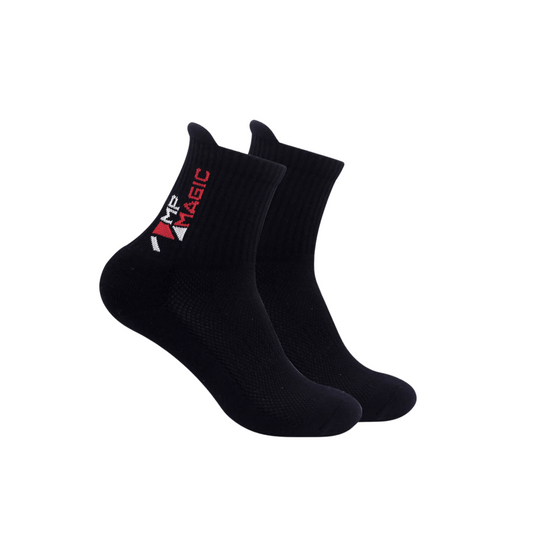
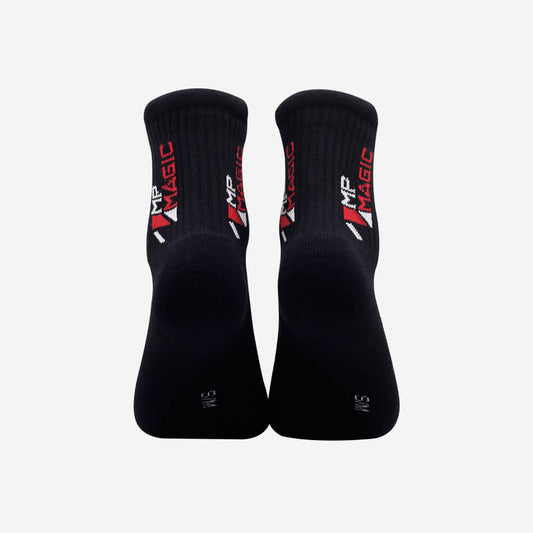
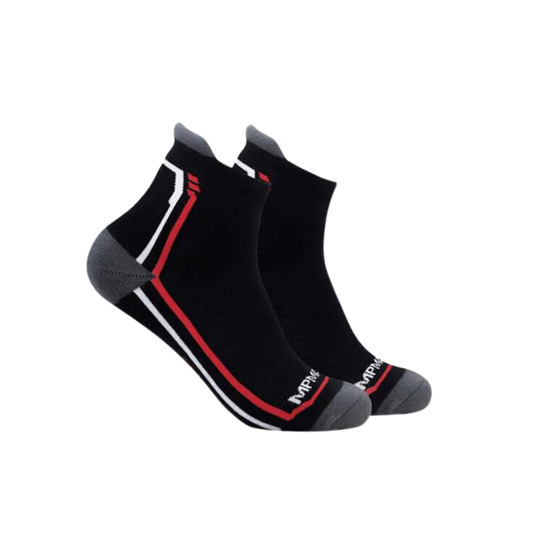
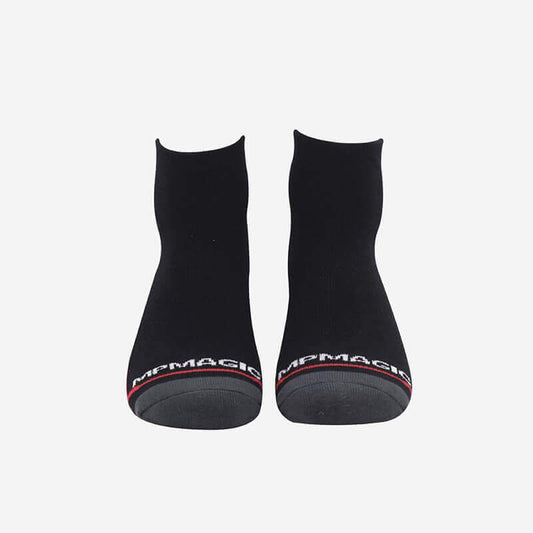
Our Classic 2.0 Merino Wool crews combine cushioning and mesh ventilation for an everyday option when your shoes have room. For a closer-fitting shoe, consider the lighter knit of our Lightweight Merino crews.
Try the chosen pair with your work uniform and required footwear before a demanding shift. If your day includes a substantial walking commute, our walking sock guide adds a moving fit check.

Frequently Asked Questions
Are thicker socks better for standing all day?
Only if the extra material feels comfortable in the shoe. Too much thickness can crowd the foot and make a previously good fit worse.
Should I wear two pairs for more cushioning?
Start with one appropriately fitted pair. Layering changes the space available in your shoes and can create folds; it is not a default solution for shift comfort.
Do I need knee-high socks for a standing job?
Height should suit your footwear and preference. A standing job alone does not establish a need for a particular sock height or medical compression.
When is a spare pair useful?
When socks become damp or dirty during the shift. Keep the spare clean and dry, and use a break to change rather than wearing an uncomfortable wet pair through the rest of the day.