How to Choose Ski Socks for Warmth and Boot Comfort


Ski boots leave very little room for a sock to disappear. A pair that feels soft in your hand may bunch near the toes, end inside the boot cuff, or make a familiar shell feel crowded. A thicker pair can even feel colder if the extra volume changes the fit.
Choosing ski socks is therefore less about finding the warmest-looking fabric and more about building a comfortable system with the boot. This guide explains how to assess height, thickness, materials, cushioning, and seams, why a single smooth layer is the usual starting point, and which MP Magic styles are worth comparing with your own footwear.
Key Takeaways
- Try ski socks with the exact boots and footbeds you use; fit matters more than thickness alone.
- Choose a sock that reaches above the boot cuff and stays smooth over the shin.
- Use one well-fitting pair unless your boot-fitting setup specifically calls for something different.
- Merino wool blends and synthetic blends can both work. The complete knit, thickness, and fit determine the final result.
- Cushioning should protect pressure-prone areas without taking away the toe space your boot needs.
Start With the Ski Boot
A ski sock does not work in isolation. The hard shell, liner, footbed, buckle tension, and sock all share the same limited volume. When one part changes, the pressure around the foot can change with it.
Research on ski boots has shown that pressure inside a tightly closed boot can affect circulation at the foot. The older equipment tested in that study differs from today's boots, but the underlying lesson remains useful: more pressure is not automatically more support or warmth. The ski-boot circulation study found that loosening the boot changed the measured response immediately.
Put on the socks before evaluating buckle settings. Your toes should still have room to lie naturally, the heel should stay seated and no fold should form under the forefoot. If a new pair changes how the boot closes or creates numbness, pressure or a persistent cold spot, reassess the sock thickness and the boot fit.
How Ski Socks Should Fit
Reach Above the Boot Cuff
A ski sock should extend above the top of the liner and shell. Fabric that ends inside the cuff creates an edge exactly where the boot presses against the lower leg. Knee-high coverage also keeps the shin in contact with one smooth layer.
Keep the Foot Smooth
The heel pocket should sit around the heel, the toe area should lie flat and the shaft should stay up without being folded over. Extra length can form wrinkles; a heel pocket that sits too low or too high is a sign to try another size.
Test Movement, Not Just Standing
Flex forward in the boot, bend the knees and hold the position you use while skiing. Check the shin, ankle bones, heel and toes. A pressure point that appears during flexion is more relevant than softness while standing in the lodge.

Thin or Cushioned Ski Socks
Thicker is not automatically warmer. A thick sock can hold more material around the foot, but it also occupies more boot volume. If it crowds the toes or changes buckle tension, the result may be less comfortable.
Begin with the space available in the boot. A close-fitting performance boot may work best with a light or targeted-cushion sock. A roomier recreational boot may accommodate more cushioning. Padding at the shin, heel, or toe can soften contact, while an overly bulky layer everywhere can hide fit problems rather than solve them.
Choosing Ski Sock Materials
Fiber labels are useful, but they do not tell the whole story. A laboratory study compared a polypropylene sock with a merino, polypropylene and polyamide blend during treadmill walking in boots. The fabrics differed in water uptake and microclimate temperature, yet the researchers did not detect differences in the skin measurements they tracked. The sock microclimate study is a useful reminder that finished construction and footwear conditions matter alongside fiber content.
| Material or Blend | What It Can Contribute | What to Check in the Boot |
|---|---|---|
| Merino wool blend | Warm feel, moisture absorption and comfort across changing conditions | Wool percentage, overall thickness, drying time and care label |
| Nylon or polyamide | Durability, smoothness and structure in high-wear areas | Whether the knit stays smooth at the heel, toe and shin |
| Polyester or polypropylene | Low water uptake and quick-drying potential, depending on construction | Ventilation, seam placement and how damp the sock feels after use |
| Elastane or spandex | Stretch and shape recovery | Whether the sock stays up without squeezing or twisting |
Avoid choosing a winner from the fiber name alone. Compare the actual blend, knit density, cushioning and boot fit. Cotton-rich everyday socks can feel comfortable elsewhere, but a pair without the right height or stable fit is a poor match for a rigid ski boot.
Should You Wear Two Pairs of Ski Socks
One smooth pair is the practical starting point for most fitted alpine boots. A second layer adds bulk and creates another fabric interface that can wrinkle or move. If the boot already fits closely, doubling the socks can also change pressure around the toes and instep.
If your feet remain cold, do not assume another sock is the only answer. Start with dry socks and warm, dry liners; check whether the boot is overly tight; and discuss persistent fit problems with a qualified boot fitter. Conditions, circulation and individual cold sensitivity also affect how feet feel.
MP Magic Socks to Compare With Your Boots
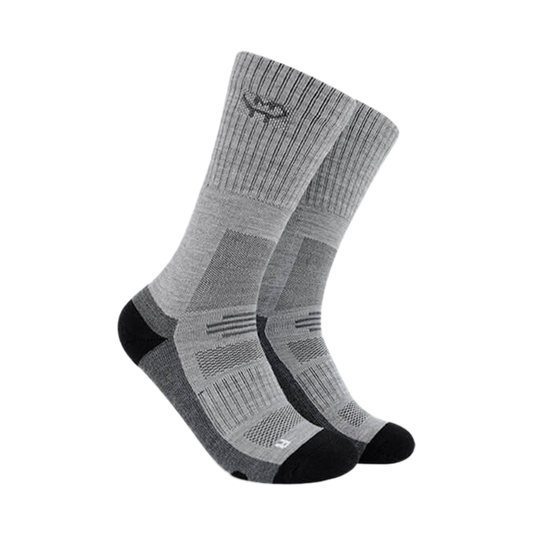
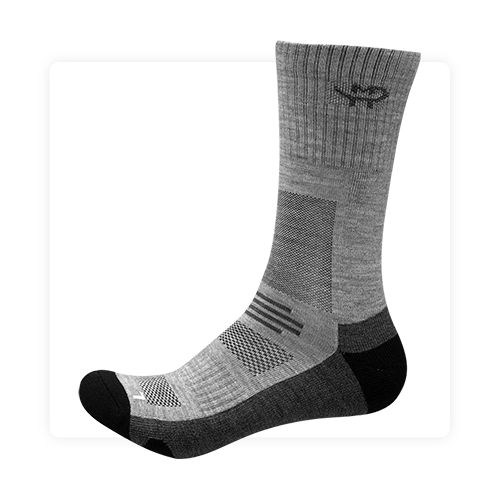
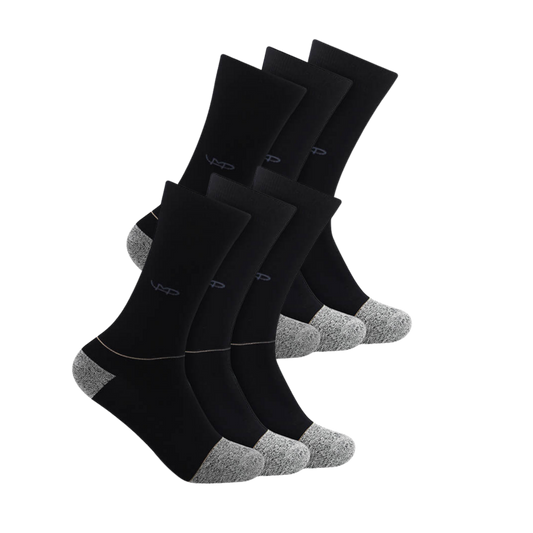
MP Magic does not use one construction for every winter setting. Compare the two styles below by shaft height, blend and the space in your footwear.
Merino Wool Knee-High Socks for Full Boot Coverage
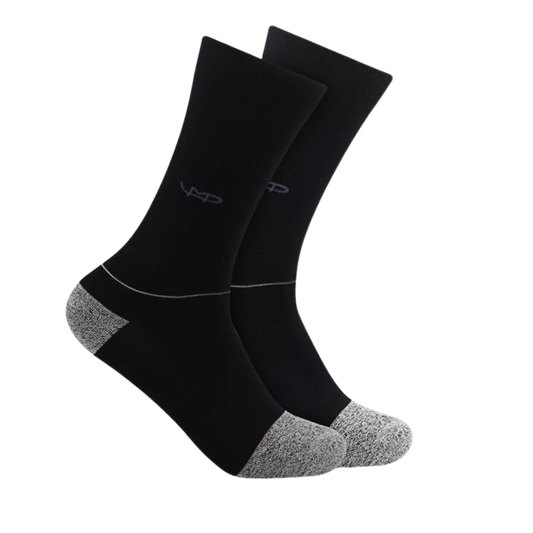
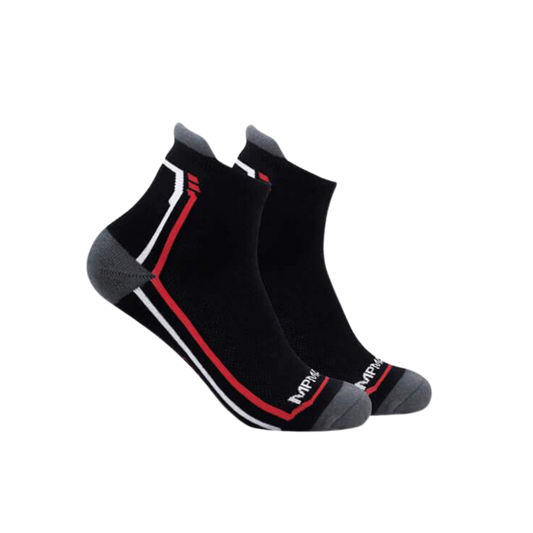
The MP Magic Merino Wool Knee-High Socks use a blend of 78% TACTEL nylon, 16% merino wool and 6% spandex. The merino is concentrated at the sole and toe, while the knee-high shaft provides coverage above a tall boot. Mesh ventilation and a smooth, close fit make this the first MP style to compare with an alpine ski boot.
Try the socks with your own liner and footbed before a full ski day. The useful questions are whether the shaft clears the cuff, the toes remain uncrowded and the fabric stays smooth during forward flexion.

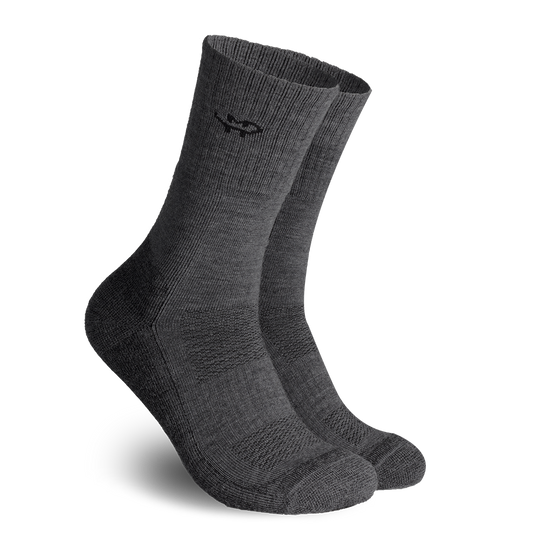
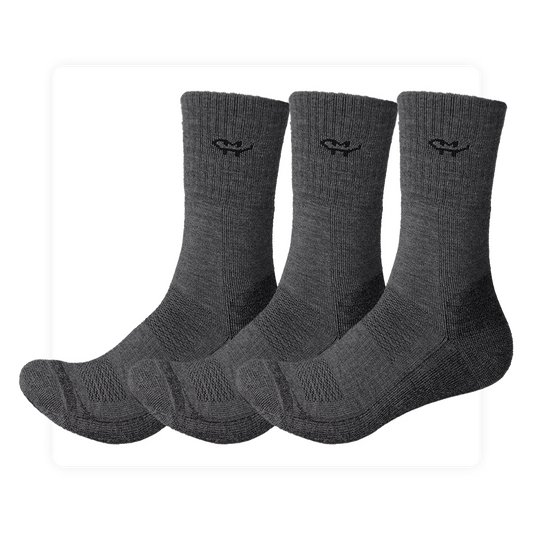
Classic 2.0 Merino Crew Socks for Winter Boots and Après-Ski
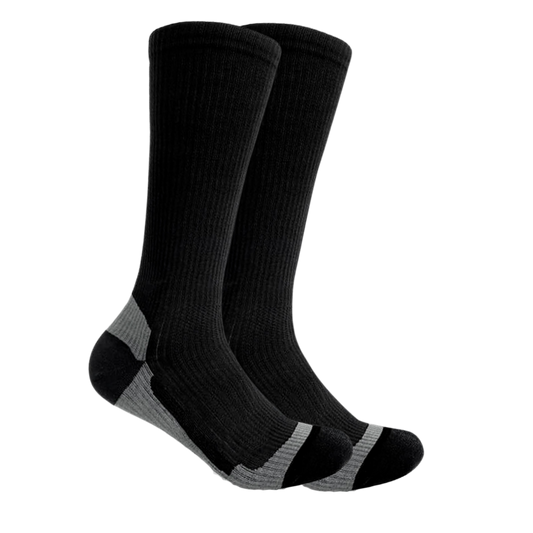
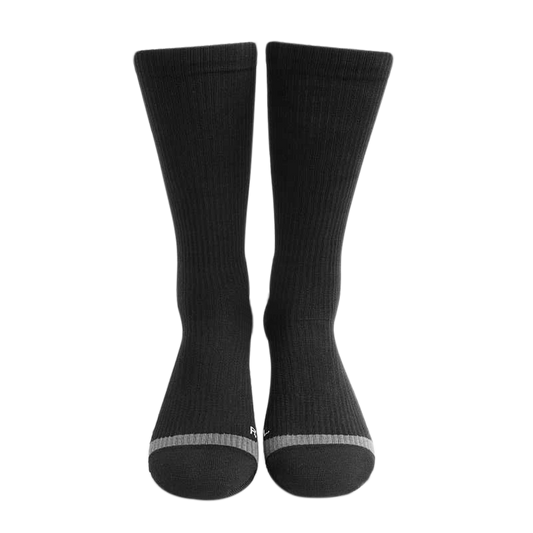
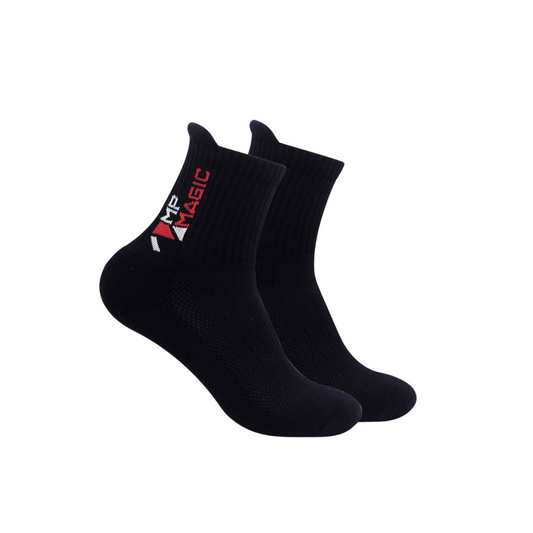
The MP Magic Classic 2.0 Merino Wool Crew Socks offer a high merino content, cushioning and mesh ventilation in a crew profile. They can be a comfortable option for everyday winter footwear, travel and après-ski wear.
For a rigid ski boot, first check where the crew cuff sits. If it finishes inside the liner or shell, choose a taller sock for skiing and keep the crew pair for the rest of the day. Our MP Merino Wool page explains how the different merino blends in the collection are built.
Care Between Ski Days
Take socks out of the boot bag after skiing and let them dry fully. Follow the care label for the specific pair. The two MP styles above allow washing at up to 40°C and low-temperature tumble drying; do not bleach, iron or dry clean them.
Dry the boot liners as well. Starting the next morning with a dry sock inside a damp liner does not solve the moisture problem. Keep enough pairs in rotation for consecutive days, and replace a pair when thinning, loose elastic or bunching changes the fit.
Frequently Asked Questions
Are Thicker Ski Socks Warmer
Not always. Warmth depends on the sock, boot, liner, conditions and individual circulation. Extra thickness can be counterproductive if it crowds the foot or changes boot pressure.
Should Ski Socks Be Knee-High
They should extend above the ski boot cuff. For most alpine boots, that means a knee-high or over-the-calf profile.
Can I Wear Merino Wool Socks for Skiing
Yes, if the finished sock has the right height, thickness and fit for the boot. Merino content alone does not make an everyday crew sock suitable for every ski boot.
How Many Pairs Should I Pack
Pack enough clean pairs for the trip and at least one spare. On consecutive ski days, each worn pair should have time to dry completely before it is used again.
Why Do My Toes Feel Cold in Ski Boots
Cold toes can have several causes, including damp socks or liners, cold conditions, individual circulation and a boot that creates too much pressure. Check the complete fit instead of adding thickness automatically.
Choose the Sock and Boot Together
The best ski socks feel uneventful once the boots are closed. They sit above the cuff, stay smooth through forward flexion and leave enough room for the foot. Start with one well-fitting pair, then let your actual boot space and conditions decide the material and cushioning that work for you.